A short, weird history of the newsletter
The newsletter is supposedly always dying, and it keeps refusing to. Substack made it cool again, LinkedIn bolted one on, every creator suddenly has one. But the format people call new is roughly three hundred years old. Here's the strange, stop-start story of how a coffeehouse pamphlet became the thing sitting in your inbox right now.
The 1600s and 1700s: gossip, ships and coffeehouses
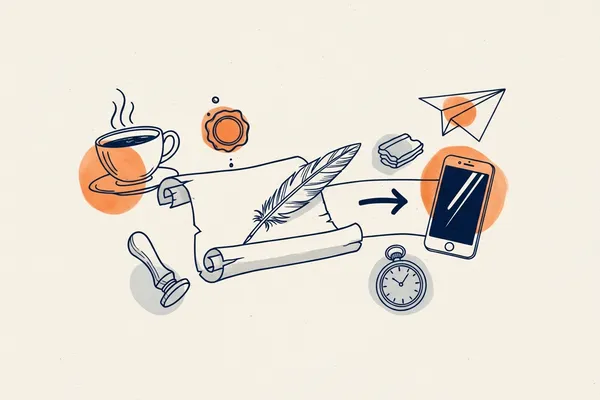
Before newspapers as we know them, Europe ran on handwritten "news letters", private, subscription-only sheets of commercial and political gossip mailed to merchants and nobles who paid for the privilege. In London's coffeehouses, printed news-sheets were passed hand to hand, each shop known for a particular flavour of information: shipping here, politics there. It was already the whole model: a list of paying subscribers, a regular cadence, and a person with a point of view. The technology was quills and horses, but the idea was Substack.
The 1700s: Ben Franklin turns it into a business
Colonial America ran on printed sheets, and Benjamin Franklin understood distribution better than anyone. As a printer and the postmaster, he made sure his own publications shipped, and his competitors' sometimes did not. It is a very old lesson dressed in a tricorne hat: owning the channel matters as much as owning the content. Every platform fight since has been a remix of the same idea.
The 1900s: the corporate newsletter (and its reputation)
By the twentieth century the newsletter had a day job. Companies, churches, clubs and unions all had one, usually photocopied, stapled, and dense with announcements nobody fully read. This is the era that gave "newsletter" its slightly musty reputation: the printed bulletin on the break-room table. Useful, earnest, and rarely thrilling.
The 1990s: it goes electronic
Then email arrived and the format changed shape overnight. Suddenly you could send to a thousand people for the cost of sending to one, and the email newsletter was born, along with the email marketing industry around it. For the fascinating longer story of the underlying technology, our team wrote a whole piece on the history of email that pairs nicely with this one.
The 2000s: spam nearly ruins everything
Cheap sending had a dark twin. Inboxes filled with junk, filters got aggressive, and the word "newsletter" started to smell like "spam" to both people and mail providers. This is the moment permission-based marketing was invented out of necessity: opt-in, unsubscribe links, and the whole discipline of deliverability that senders still live by today. The blog era and RSS feeds offered a rival way to follow along, and plenty of people wrote the newsletter's obituary.
Fancy adding a chapter to this story? You can start your own newsletter in an afternoon, no printing press or postmaster required.
The 2010s and 2020s: the great comeback
The obituary was premature. As social feeds grew noisy and algorithmic, people craved something calmer and more direct, and the newsletter was perfectly placed: no algorithm between writer and reader, just a list and a send button. Substack, Ghost, and a wave of creator tools turned "I have a newsletter" into a career path. The coffeehouse pamphlet was back, this time monetised.
Why the newsletter keeps coming back
Strip away three centuries of technology and the same four things explain its stubborn survival:
- You own the list. No platform can throttle your reach to people who chose to hear from you. That is the one thing social media can never quite offer.
- It's direct. One writer, one reader, no feed in between.
- It rewards trust, not virality. People let you into their inbox on purpose, and that permission is worth more than a thousand passing impressions.
- It's simple. A point of view, a list, a regular rhythm. That recipe worked in 1710 and it works now.
The tools change every few decades. The thing itself, a person you trust, showing up in your inbox on a schedule, has never really gone away.
Frequently asked questions
What was the first newsletter?
The ancestors were handwritten "news letters" sold by subscription in 16th and 17th century Europe, private sheets of commercial and political news mailed to paying readers, long before printed newspapers became widespread.
Why did email newsletters become so popular in the 1990s?
Email made distribution nearly free: reaching a thousand subscribers cost roughly the same as reaching one. That economics created both the email newsletter and the entire email marketing industry around it.
Are newsletters actually making a comeback?
Yes. As social feeds became crowded and algorithm-driven, readers and writers returned to the newsletter for its directness and ownership, powering platforms like Substack and a broad creator-newsletter economy.
Mailpro and newsletters
Write the next chapter, in your own inbox
Design, send and grow a newsletter people actually open, with drag-and-drop templates and deliverability built in. Swiss-hosted, GDPR-native, since 2001.