
What Is Email Deliverability?
Email deliverability refers to the ability of your emails to successfully reach your recipients' inboxes — not their spam folder, not the promotions tab, but the actual inbox where they are seen and read. It is not the same as email delivery. An email can be technically "delivered" (accepted by the receiving server) and still never be seen if it is filtered into spam.
For businesses, poor deliverability means lost revenue, missed communications, and a damaged sender reputation that is hard to recover. Every campaign you send — whether a newsletter, a promotional offer, or a transactional confirmation — depends on deliverability to create real business value.
Mailpro is built from the ground up with deliverability at its core. Our infrastructure, hosted in Switzerland, maintains clean IP addresses, enforces strict anti-spam policies, and gives you every tool you need to authenticate your domain, clean your list, and monitor your results in real time — all in one place inside the Intelligent Deliverability Center.
- 97% of emails delivered within one hour
- Built-in spam tester before every send
- Guided SPF, DKIM, and DMARC setup
- Real-time statistics per inbox provider (Gmail, Outlook, Yahoo and more) inside the Deliverability Center
- Swiss-hosted infrastructure with 24/7 IP reputation monitoring
Whether you are just starting out or troubleshooting a sudden drop in open rates, this guide covers every aspect of email deliverability — and shows you exactly how Mailpro helps you solve each one.
Intelligent Deliverability Center
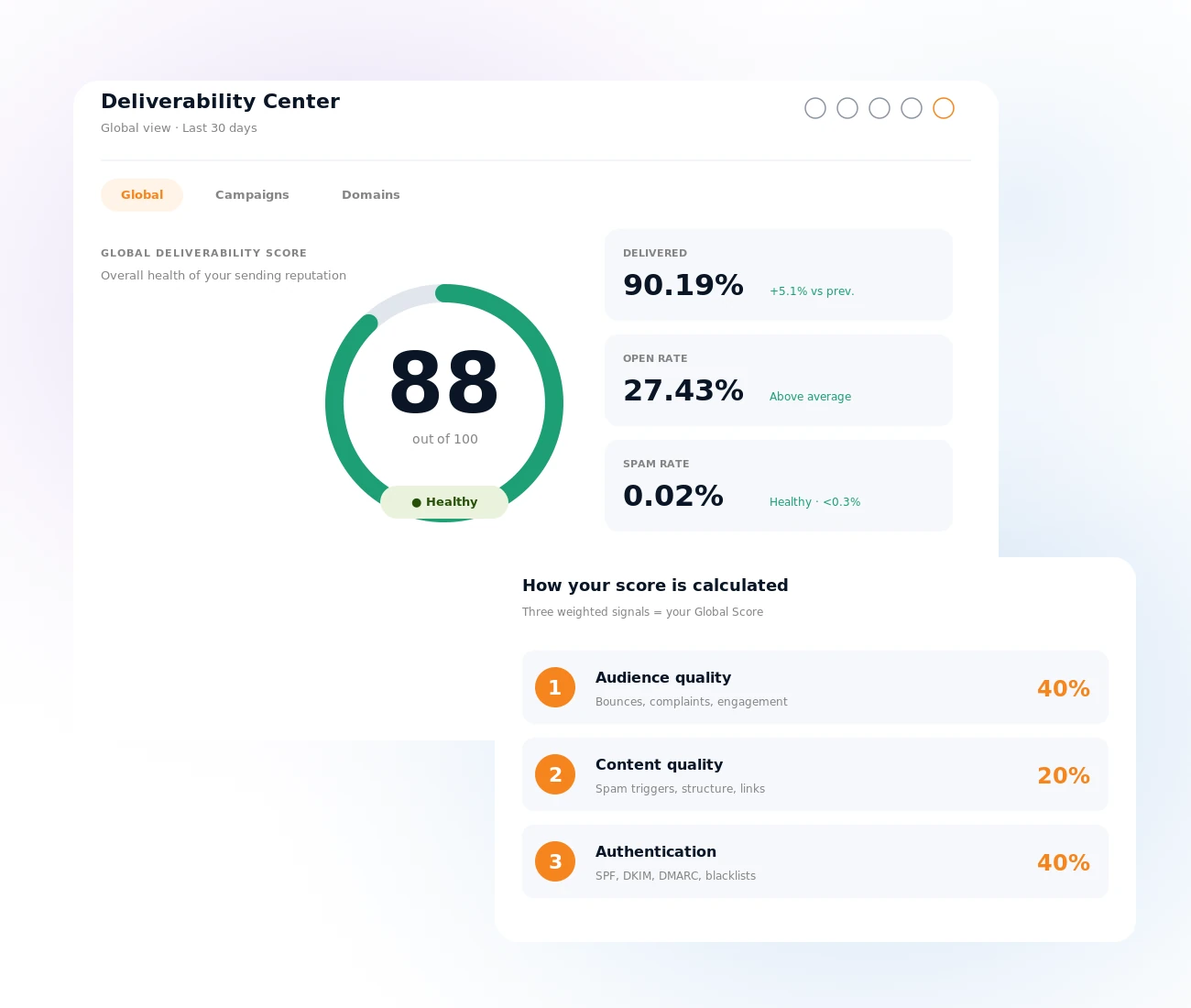
Every signal that decides whether your emails reach the inbox — SPF, DKIM, DMARC, blacklist status, spam complaints, engagement, and sender reputation — lives on a single page: the Mailpro Intelligent Deliverability Center. You see one Global Score from 0 to 100, a score for every campaign you send, and a score for every sending domain, each with plain-language guidance on what to do next.
The Center is available to every Mailpro customer at no extra cost, giving you the continuous monitoring and concrete recommendations you need before a problem costs you a campaign.
Explore the Deliverability Center ⟶
Email Authentication: SPF, DKIM & DMARC
Email authentication is the foundation of deliverability. Without it, inbox providers like Gmail and Yahoo have no way to verify that your emails actually come from you — and they will treat them with suspicion.
SPF tells receiving servers which servers are authorized to send on behalf of your domain. DKIM adds a cryptographic signature to every email so recipients can verify it has not been tampered with. DMARC ties SPF and DKIM together and tells inbox providers what to do when a message fails — reject it, quarantine it, or let it through.
Since 2024, Gmail and Yahoo require all bulk senders to have SPF, DKIM, and DMARC configured. Mailpro walks you through each step with clear DNS instructions and a built-in verification tool.
Set up email authentication ⟶

IP Reputation Management
Your sender reputation is a score that inbox providers assign to your sending IP address based on your sending history. It is the single biggest factor determining whether your emails reach the inbox or land in spam.
Reputation is built through positive signals — engaged subscribers who open and click — and damaged by negative ones: high bounce rates, spam complaints, and sending to cold or purchased lists. Because reputation is cumulative, every campaign you send affects the performance of the next one.
Mailpro's team of experts closely monitors all IP reputations 24/7, so you never have to worry about another sender on a shared IP dragging you down.
Learn about IP reputation management ⟶

Spam Testing Before You Send
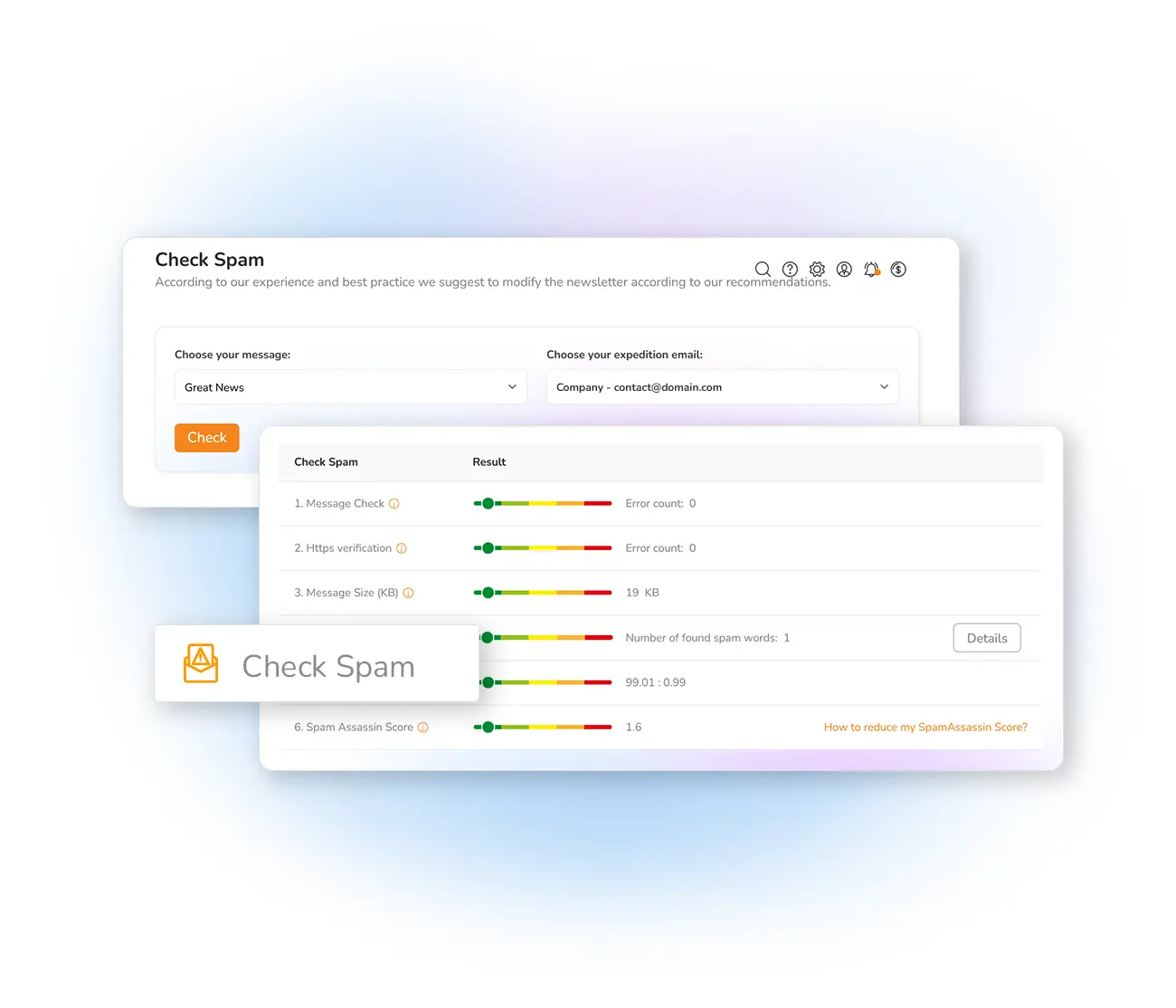
Before every campaign, Mailpro runs a built-in spam test that checks your email against the most common spam filter criteria — including your subject line, content, image-to-text ratio, link structure, and authentication alignment.
Catching deliverability issues before you hit send is always better than diagnosing them after. The spam tester gives you a clear score and actionable recommendations so you can fix problems while there is still time.
Try the spam tester ⟶
Bounce Management
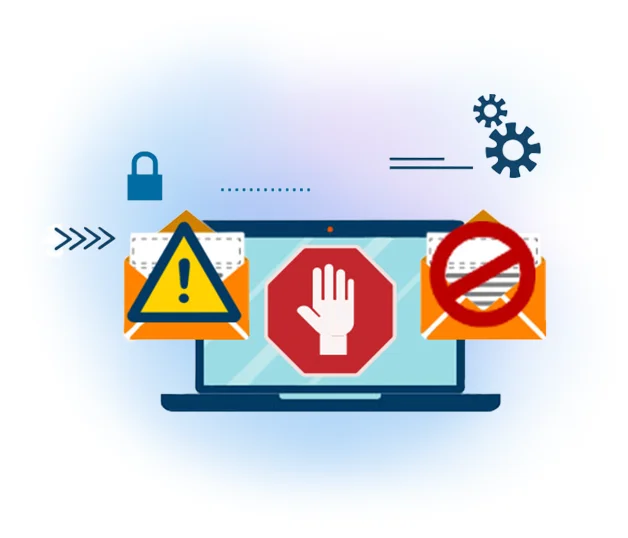
A bounce occurs when an email cannot be delivered to a recipient's address. Hard bounces are permanent failures — the address does not exist or the domain is invalid. Soft bounces are temporary — a full inbox or a server briefly unavailable.
High bounce rates are one of the fastest ways to damage your sender reputation. Mailpro automatically detects, categorizes, and suppresses bounced addresses so your list stays clean without any manual work on your part.
Understand hard and soft bounces ⟶
List Hygiene & Segmentation
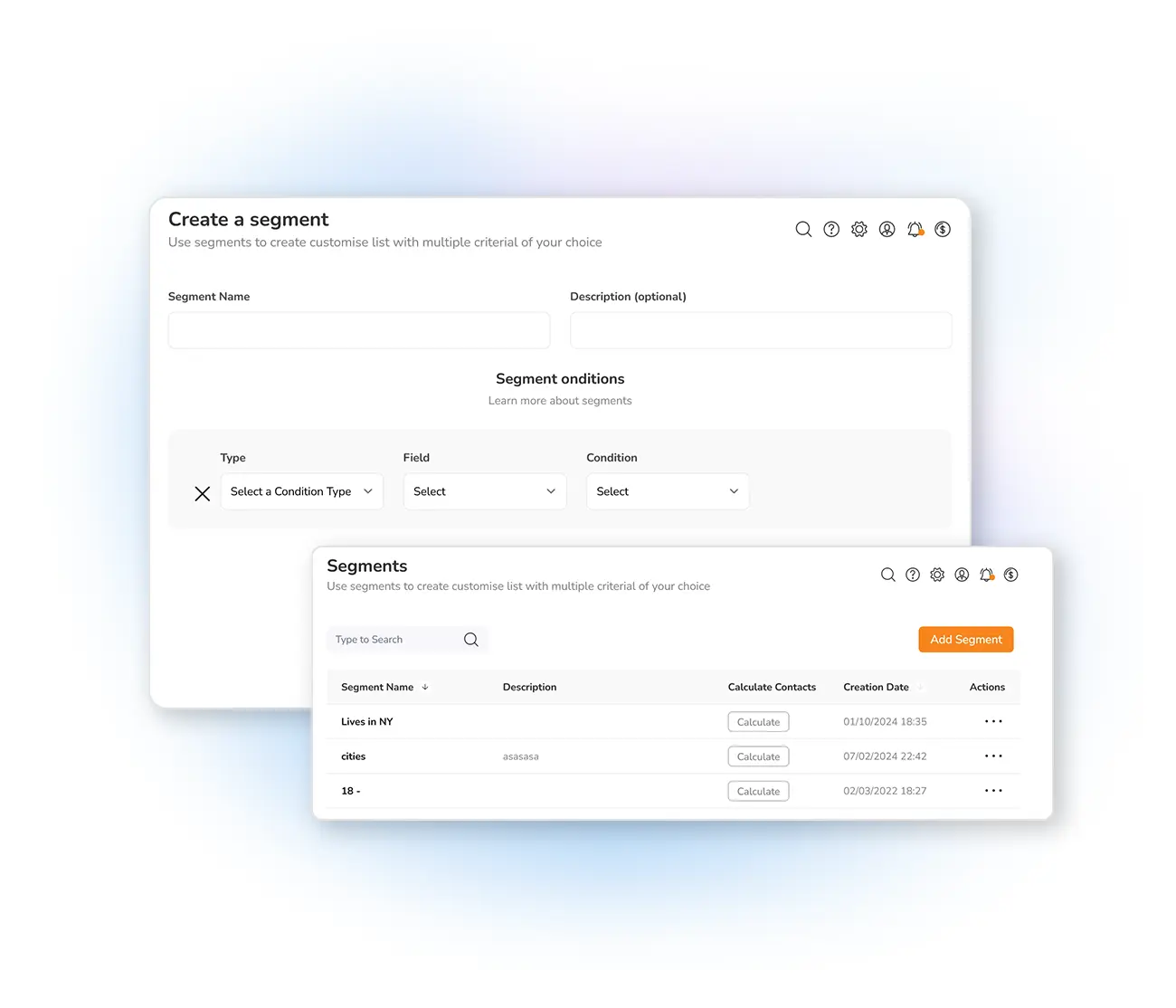
Sending to a large list is not the same as sending to a good list. Inactive subscribers who never open your emails drag down your engagement metrics — a signal inbox providers use to decide your emails are unwanted.
Mailpro gives you full control over your contact database: segment by engagement level, suppress inactive contacts, remove duplicates, and target only the subscribers who are genuinely interested. Cleaner lists mean better inbox placement, lower complaint rates, and higher ROI from every campaign.
Explore list segmentation ⟶
Double Opt-In: The Deliverability Foundation
The single most effective thing you can do for long-term deliverability is to only send to people who genuinely want your emails. Double opt-in ensures every subscriber on your list has confirmed their intent — once when they sign up, and once when they click the confirmation email.
This eliminates typos, bots, and accidental signups before they ever cause a problem. It is also required under GDPR for most use cases, and fully supported by Mailpro's subscription form tools.
Set up double opt-in ⟶
Swiss Infrastructure Built for Deliverability
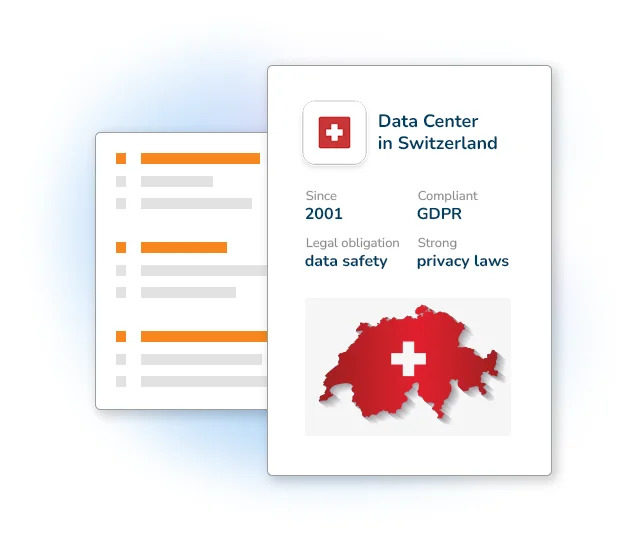
Mailpro's email infrastructure is hosted entirely in Switzerland. Our servers run on high-availability virtual MTAs with automatic failover, connected to some of the fastest fiber networks in Europe. A dedicated team monitors IP reputation, blacklist status, and sending patterns around the clock.
When you send through Mailpro, you are sending through an infrastructure optimized for inbox placement for over 25 years — with the legal protections of Swiss data law and a reputation built on strict anti-spam enforcement.
Our Swiss infrastructure ⟶
Go Deeper: Deliverability Guides & Resources
These resources from the Mailpro blog cover every aspect of email deliverability in detail:
- Intelligent Deliverability Center — Your Score on a Single Page
- Email Deliverability: What It Is, How It Works & How to Improve Inbox Placement
- How to Diagnose a Sudden Drop in Deliverability (Step-by-Step)
- Delivering to Gmail and Yahoo: New Requirements Explained
- Why Am I Getting Blocked by Microsoft/Outlook?
- What Is an SPF Record and How Does It Work?
- SPF and IPv6: Why SPF Fails Even When It Looks Correct
- 15 Common Reasons Why Your Email Delivery Fails
- Pros and Cons of a Dedicated IP for Email Marketing
- How to Keep Your Spam Complaint Rate Below 0.3%
- How to Reduce Your SpamAssassin Score
- Email Deliverability: Full Academy Guide
Unleash the Power of Professional Email Marketing
Secure, scalable, and built for impact. Join Mailpro™ today and enjoy 500 free credits to send your first campaign.
Start Sending for Free