Anatomy of an email that gets opened
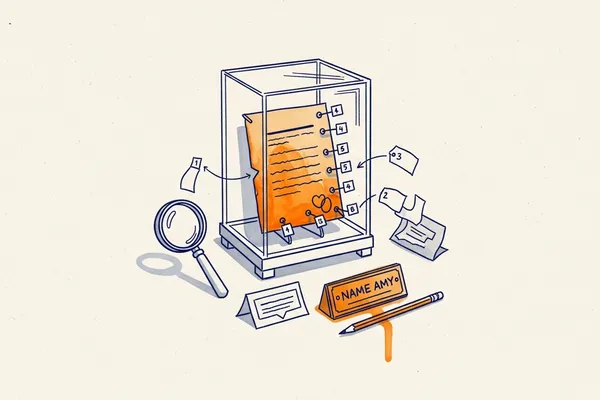
Welcome to the museum. In the glass case before you is a single, unremarkable-looking email, the kind that quietly gets opened, read to the end, and clicked. It looks effortless. It is not. An email that works is a handful of small, deliberate parts doing their jobs at once, and today we are going to label every one of them. Please do not tap on the glass.
On the placard (the short version)
- Getting opened is decided by two things the reader sees before opening: the sender name and the subject line.
- Getting read is decided by the preheader, the first line, and how scannable the body is.
- Getting clicked is decided by one clear call to action, not five competing ones.
- Everything else, the greeting, the P.S., the footer, is quietly building trust.
The specimen
Exhibit A: a welcome-back email from a small photography studio. Study it, then read the labels below.
① Anna from Studio Lumen <[email protected]>
② Marta, your gallery is ready
③ Download links inside, plus a small thank-you.
④ Hi Marta,
⑤ Your photos from Saturday turned out beautifully, the light in the last few is my favourite. Everything is ready to download in one place, full resolution, yours to keep.
Warmly,
Anna
⑦ P.S. Print the third one big. Trust me.
⑧ Studio Lumen · 12 Rue des Arts, Geneva · Unsubscribe
The exhibit labels
① The sender name
Notice the artist signs with a human name, "Anna from Studio Lumen," not "no-reply" or "Studio Lumen Marketing Team." The sender name is the first thing a reader judges, often before the subject line even registers. A real name from a recognised source is what earns the open. It also helps that the address sits on the studio's own authenticated domain, the invisible detail that keeps this out of the spam folder. If you have never set it up, this is where email authentication quietly does its work.
② The subject line
Short, specific, and personal: "Marta, your gallery is ready." No shouting, no emoji pile-up, no "LIMITED TIME." It promises exactly one thing and delivers it. The best subject lines read like a message from a person, not a billboard, and length matters less than clarity.
③ The preheader
That grey line after the subject is the preheader, the most wasted piece of real estate in email. Here it extends the promise ("Download links inside") instead of repeating the subject or, worse, showing "View this email in your browser." The preheader is a free second subject line; this specimen actually uses it.
④ The greeting
"Hi Marta." One personalised word does an enormous amount of quiet work: it signals the sender knows who they are writing to, and that this is not a blast to fifty thousand strangers. Personalisation is not gimmickry; it is the difference between a letter and a leaflet.
⑤ The opening line
The first sentence gives before it asks: "Your photos turned out beautifully." It leads with the reader's payoff, not the sender's news. Most emails open with "We are excited to announce," which is a sentence about the sender. This one is about Marta. That is why she keeps reading.
⑥ The single call to action
One button. One colour. One job: "View your gallery." An email that asks for five things gets none of them; an email that asks for one, clearly, gets clicked. Give the eye a single obvious place to go and you will see it in your click-through rate.
Want to build emails that look like this without touching code? See how a drag-and-drop email comes together.
⑦ The P.S.
"Print the third one big. Trust me." The postscript is one of the most-read lines in any email, and here it is pure personality, no sales pitch. It reminds the reader there is a human on the other end. A good P.S. is a handshake, not a footnote.
⑧ The footer and unsubscribe
A real postal address and a plain, visible unsubscribe link. This is not just good manners, it is the law in most places, and a clear footer actually protects deliverability: an easy unsubscribe beats a spam complaint every single time. Hiding the exit does not keep people in; it just makes them angry on the way out.
What the whole specimen teaches
Step back from the glass and the lesson is almost dull: none of these parts is clever. There is no growth hack, no trick subject line, no manipulation. The email gets opened because a real person sent something specific to someone who wanted it, and made every part easy. That is the whole secret, and it is why it keeps working long after the latest tactic has stopped.
Print this specimen, pin it above your desk, and hold your next send up against it. If every label checks out, you have built something that gets opened.
Frequently asked questions
What makes an email get opened in the first place?
Two things the reader sees before opening: the sender name and the subject line. A recognisable, human sender name paired with a short, specific subject does most of the work. Everything inside the email affects whether it gets read and clicked, not whether it gets opened.
How many calls to action should an email have?
Ideally one. A single, clear call to action consistently outperforms several competing ones, because it removes the decision of where to click. Secondary links can live quietly in the footer, but the main action should be unmissable and alone.
Does personalisation really matter, or is it a gimmick?
It genuinely matters when it is real. Using a first name and referencing something relevant signals that the email was meant for this person, which lifts engagement. Personalisation becomes a gimmick only when it is fake or clumsy, like a mail-merge that shows "Hi FIRSTNAME."
Is the preheader worth bothering with?
Yes. The preheader is a second subject line shown right beside the first in most inboxes. Left unset, it displays whatever text comes first in your email, often a broken "view in browser" line. Setting it deliberately gives you a free extra hook.
Mailpro and great emails
Build the kind of email worth putting in a glass case
Drag-and-drop templates, a built-in spam check and clear stats help every part of your email do its job. Swiss-hosted, GDPR-native, since 2001.